Digital Restaurant Menu
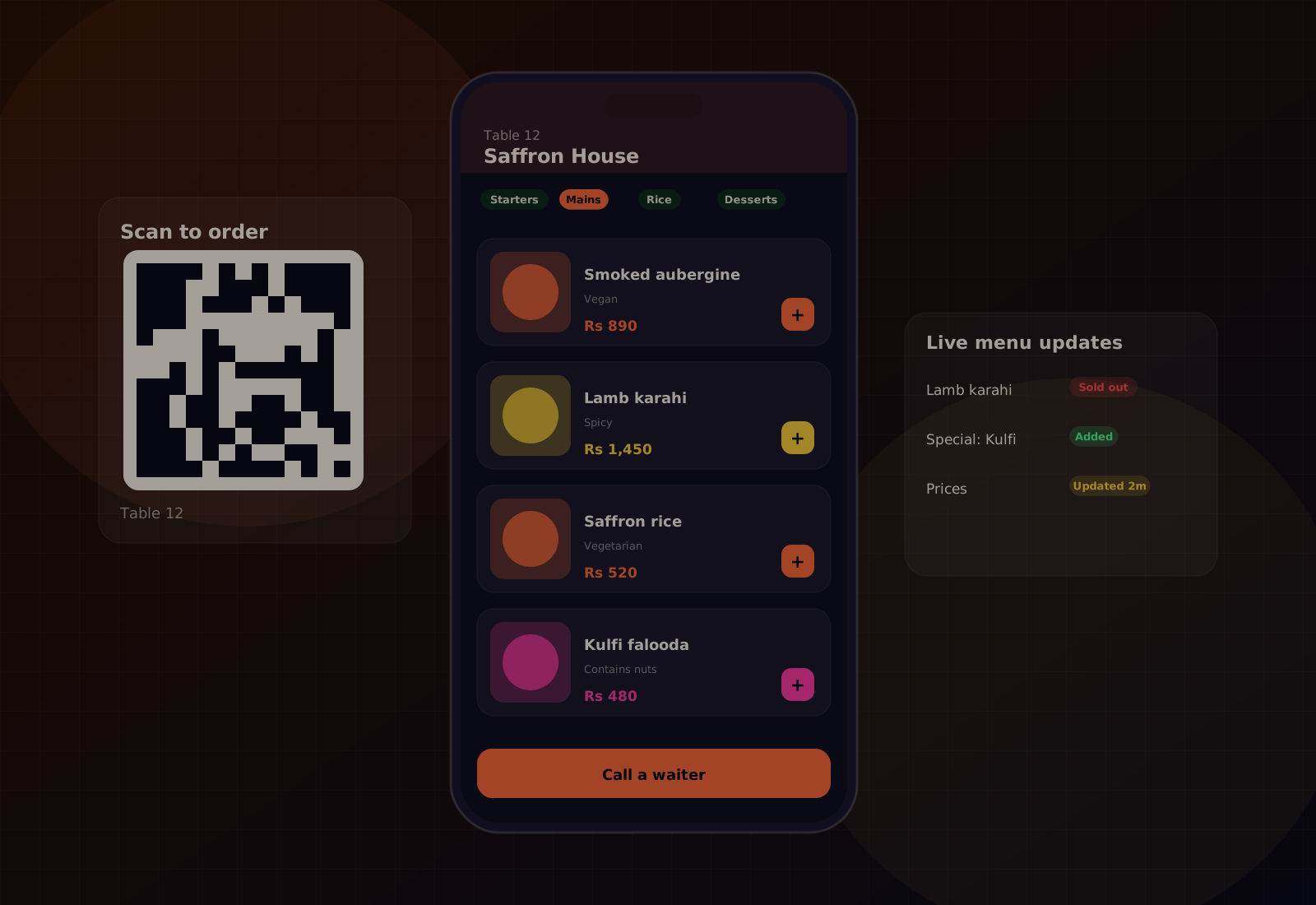
A QR-based digital menu: customers scan a code at the table to browse the menu on their phone, while staff update items and prices from a simple management panel.
Overview
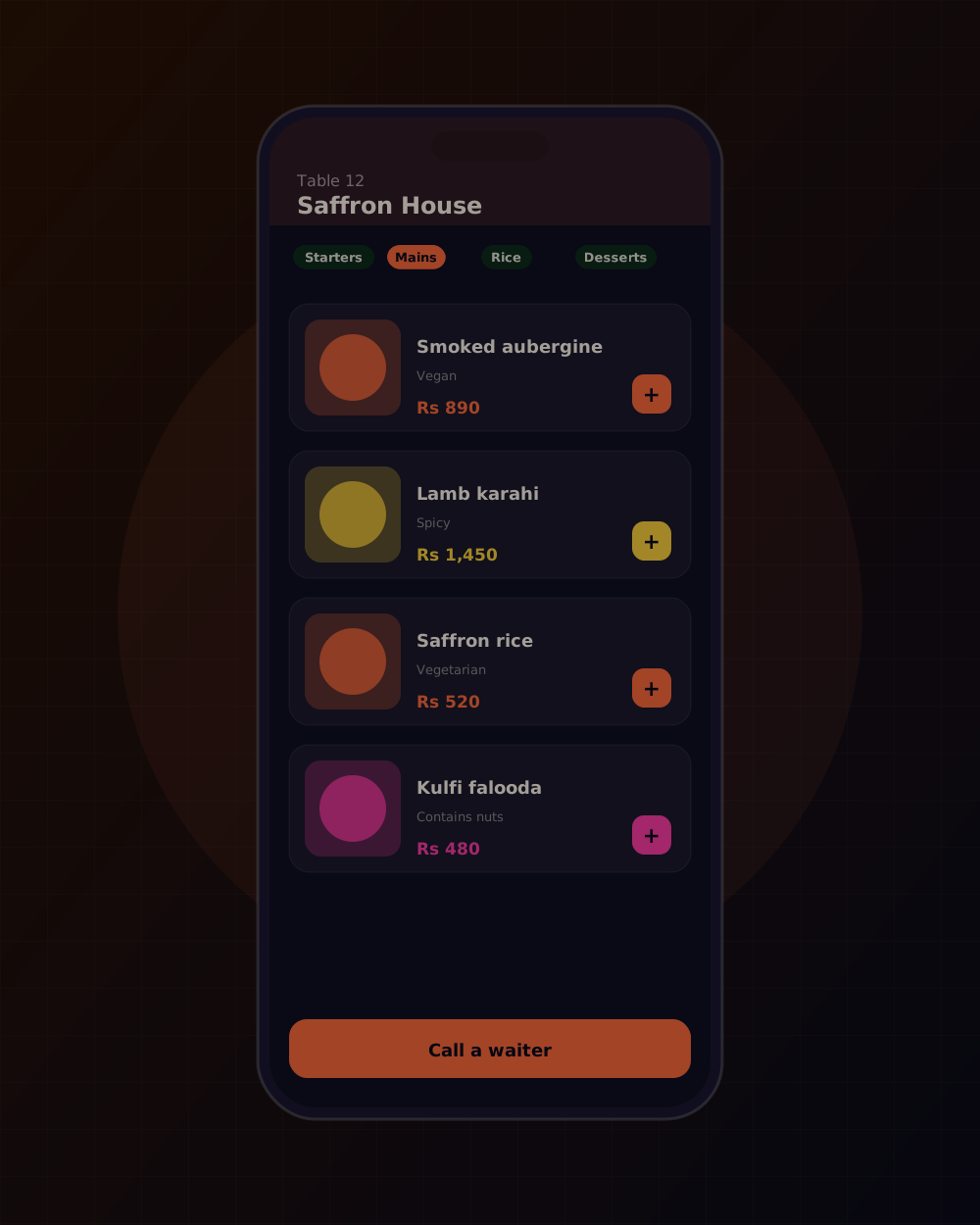
A digital menu and management system for restaurants. Each table gets a QR code; scanning it opens the live menu on the customer's phone with categories, photos, prices and dietary labels. Behind it, a management system lets the restaurant edit the menu in minutes.
Challenge
The customer view has to load instantly on any phone without an app, and menu changes made by staff have to appear immediately. The management side must be usable by non-technical staff.
Process
- 01
Designed the customer menu mobile-first with fast category navigation and clear pricing.
- 02
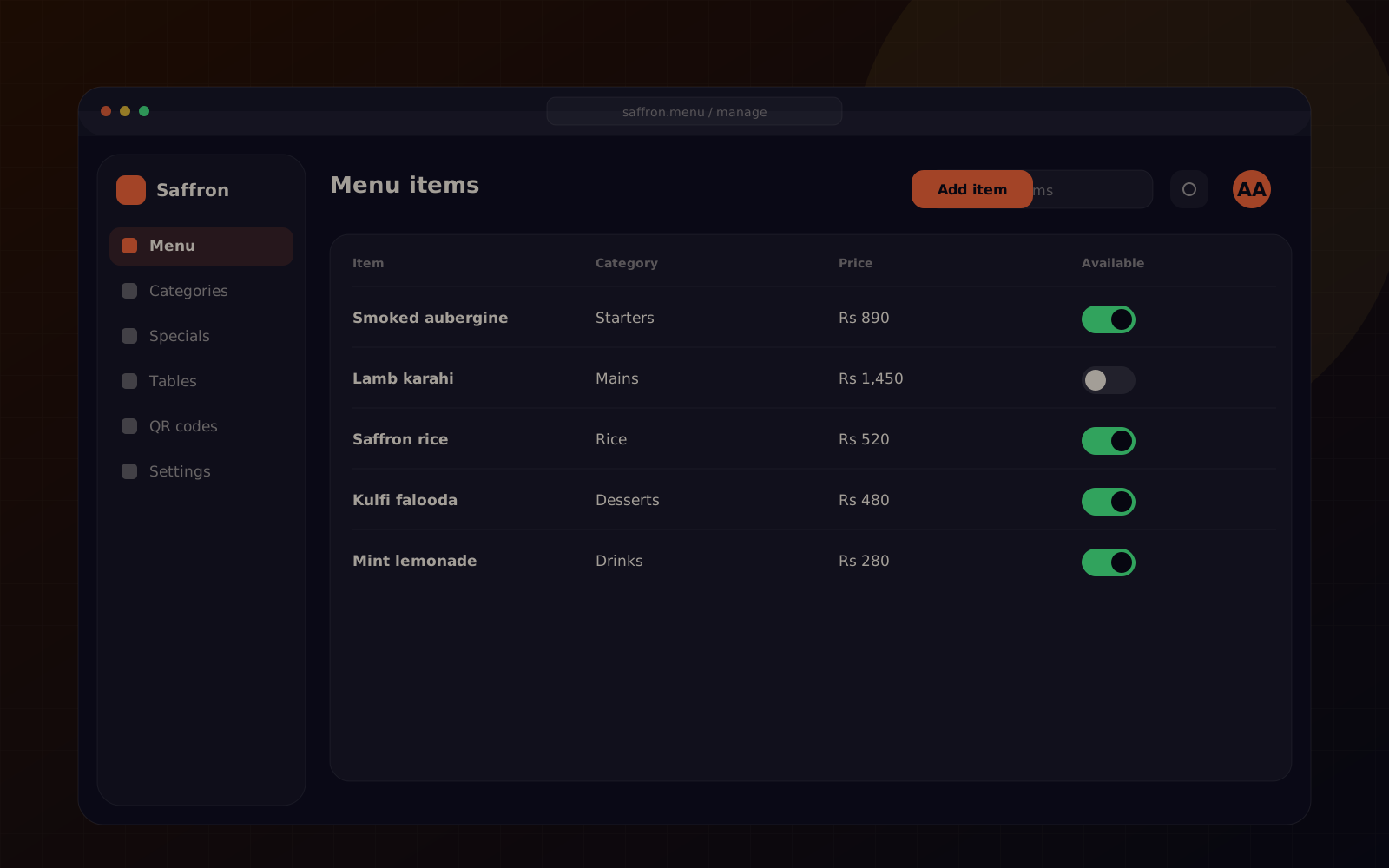
Built a management panel for items, categories, prices, availability and photos.
- 03
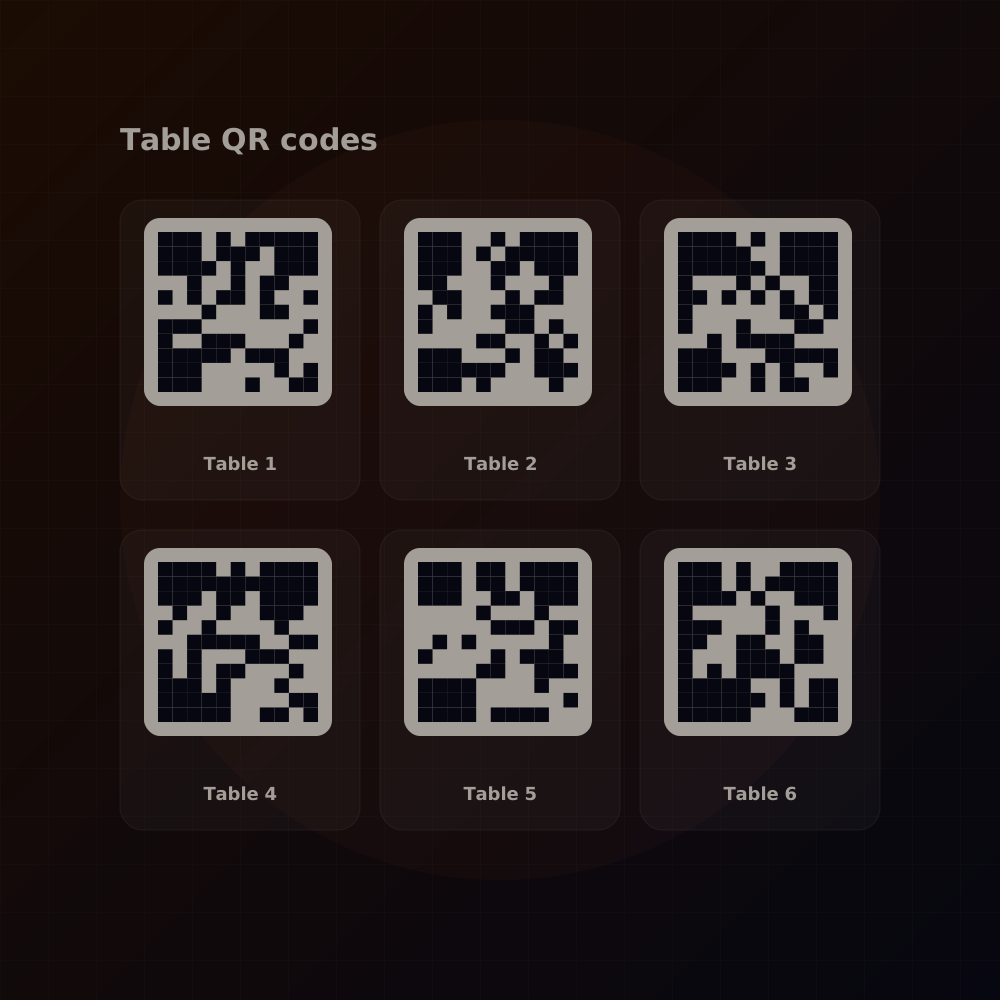
Generated per-table QR codes that link to the menu with the table identified.
- 04
Kept the menu data lightweight so it loads quickly on slow connections.
Solution
A Next.js customer menu backed by a Node.js API and MongoDB, with a separate management panel for staff. Menu edits write to the database and the customer view reads the latest data on every open, so updates are live without redeploying.
Features
Prism
An experimental WebGL scene: a refractive glass form that reacts to the cursor and scroll, built to learn shaders, post-processing and performance budgeting.
Open case study